Ankusha, Aṃkuśa, Aṅkūṣa, Aṅkuśā, Aṅkuśa, Aṃkuśā, Amkusha: 53 definitions
Introduction:
Ankusha means something in Buddhism, Pali, Hinduism, Sanskrit, Jainism, Prakrit, the history of ancient India, Marathi, Hindi, biology. If you want to know the exact meaning, history, etymology or English translation of this term then check out the descriptions on this page. Add your comment or reference to a book if you want to contribute to this summary article.
The Sanskrit terms Aṃkuśa and Aṅkūṣa and Aṅkuśā and Aṅkuśa and Aṃkuśā can be transliterated into English as Amkusa or Amkusha or Ankusa or Ankusha, using the IAST transliteration scheme (?).
Alternative spellings of this word include Ankush.
Images (photo gallery)

In Hinduism
Shilpashastra (iconography)
Aṅkuśa (अंकुश, ‘elephant-goad’) is a weapon (āyudha or bādhra) according to the Vāstusūtra Upaniṣad.
Aṅkuśa or the elephant goad is a weapon consisting of a sharp metal hook attached to a wooden handle.
The elephant goad (aṅkuśa) of Gaṇeśa — represents perseverance on the path of spiritual practice. The spiritual path is very arduous and difficult but if we are committed then Gaṇeśa when propitiated will prod us by means of the Goad, and guide us to our supreme destination — union with the Divine. But that incentivization will require pain and suffering!!
Aṅkuśa (Elephant Goad) - Incentive to continue in spiritual practice and the application of the teachings. The urging of the guru which drives us to practice and apply. Also - the control of anger.
Aṅkuśa (अङ्कुश, “goad”) refers to one of the several “attributes” (āyudha) or “accessories” of a detiy commonly seen depicted in Hindu iconography, defined according to texts dealing with śilpa (arts and crafs), known as śilpaśāstras.—Aṅkuśa or the elephant goad is a weapon consisting of a sharp metal hook attached to a wooden handle.
Aṅkuśa also represents “colourlessness”, referring to one of the attributes of Lord Śiva.
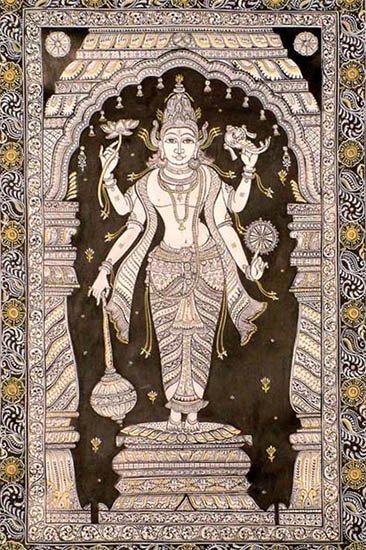
Shilpashastra (शिल्पशास्त्र, śilpaśāstra) represents the ancient Indian science (shastra) of creative arts (shilpa) such as sculpture, iconography and painting. Closely related to Vastushastra (architecture), they often share the same literature.
Purana and Itihasa (epic history)
Aṅkuśa (अङ्कुश):—It was probably not a weapon of war, and was probably used only to control elephants.
Aṅkuśa (अङ्कुश) refers to “goads”, according to the Śivapurāṇa 2.4.7 (“Commencement of the War”).—Accordingly, as Brahmā narrated to Nārada: “[...] The backs of some were torn with javelins and goads (aṅkuśa). Several heads chopped off by double-edged swords fell on the ground. Hundreds of headless, limbless trunks were seen dancing and bouncing with arrows sticking to their hands. Blood flowed like streams in hundreds of places. Hundreds of ghosts and goblins flocked there. [...]”.
Aṅkuśā (अङ्कुशा).—A Śakti on the Drāviṇikā mudrā.*
- * Brahmāṇḍa-purāṇa IV. 36. 76.

The Purana (पुराण, purāṇas) refers to Sanskrit literature preserving ancient India’s vast cultural history, including historical legends, religious ceremonies, various arts and sciences. The eighteen mahapuranas total over 400,000 shlokas (metrical couplets) and date to at least several centuries BCE.
Dhanurveda (science of warfare)
Aṅkuśa (अङ्कुश) refers to a weapon (“hook”, “elephant goad”). It is a Sanskrit word defined in the Dhanurveda-saṃhitā, which contains a list of no less than 117 weapons. The Dhanurveda-saṃhitā is said to have been composed by the sage Vasiṣṭha, who in turn transmitted it trough a tradition of sages, which can eventually be traced to Śiva and Brahmā.
Aṅkuśa (अङ्कुश) or “goad” is the name of a weapon produced by Nārāyaṇa, as discussed in chapter 10 of the Ṛṣirātra section of the Sanatkumārasaṃhitā: an encyclopedic Sanskrit text written in over 3500 verses dealing with a variety of topics such as yoga, temple-building, consecration ceremonies, initiation and dhanurveda (martial arts).—Description of the chapter [śastralakṣaṇa]: Sanatkumāra offers to recount the story of how the weapons of the Lord came into being when the gods requested Nārāyaṇa to help them in their encounters with the demons. At their request He produced [e.g., the aṅkuśa-goad] [...]. He also composed a handbook, known as the Dhanurveda, which has been passed down from generation to generation. It tells how to use these weapons, both as astra or as śastra effectively.
Aṅkuśa (ଅଙ୍କୁଶ) refers to an ancient Indian military unit of measurement (i.e., 1 Aṅkuśa equals 10 Bikṣabhaṇī), as described in the Sāraḷā Mahābhārata (i.e., the Odia Mahabharata): an adaption of the Sanskrit Mahābhārata (authored by Sāraḷā Dās) which represents an important foundation of the intellectual and cultural heritage of Oḍiśa.—The mention of mathematics in ancient Oḍiśā is found in the Mahābhārata. Mathematics education is the rural mathematics education of Oḍiśā, which was included in the rural education of that time. After introducing Kṣauṇī (Count Formula), each of the quantity, Keśinī has instructed the amount of the Padma (Cf. Mahanty, 2020, p. 388).
10 Śaha is equal to 1 Sahasra;
10 Sahasra is equal to 1 Ahibrata;
10 Ahibrata is equal to 1 Lakṣa;
10 Lakṣa is equal to 1 Koṭi;
10 Koṭi is equal to 1 Marbhuta;
10 Marbhuta is equal to 1 Mebaccha;
10 Mebaccha is equal to 1 Bṛnda;
10 Bṛnda is equal to 1 Kharba;
10 Kharba is equal to 1 Nikharba;
10 Nikharba is equal to 1 Śaṅkha;
10 Śaṅkha is equal to 1 Padma;
10 Padma is equal to 1 Sāgara;
10 Sāgara is equal to 1 Ananta;
10 Ananta is equal to 1 Parārddha;
10 Parārddha is equal to 1 Mārāyudha;
10 Mārāyudha is equal to 1 Kṣaraṇī;
10 Kṣabhaṇī is equal to 1 Bikṣabhaṇī;
10 Bikṣabhaṇī is equal to 1 Aṅkuśa;
10 Aṅkuśa is equal to 1 Anaḷi;
10 Anilḷa is equal to 1 Kāṭhi;
10 Kāṭhi is equal to 1 Bikāṭhi.
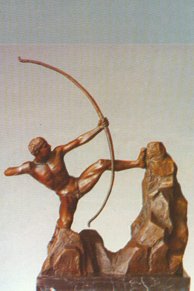
Dhanurveda (धनुर्वेद) refers to the “knowledge of warfare” and, as an upaveda, is associated with the Ṛgveda. It contains instructions on warfare, archery and ancient Indian martial arts, dating back to the 2nd-3rd millennium BCE.
Shaivism
Aṅkuśa (अङ्कुश) refers to a “goad” and represents one of the attributes of Svacchanda, according to the Śrīmatottara-tantra, an expansion of the Kubjikāmatatantra: the earliest popular and most authoritative Tantra of the Kubjikā cult. Accordingly, “O goddess, Svacchanda is in the middle, within the abode of the triangle. Very powerful, he has five faces with three times five flaming eyes. [...] O fair lady, my attributes—trident, dagger, sword, the king of the snakes, and rosary—adorn the right (arms). O beloved, a skull, double-headed drum, javelin, noose and goad [i.e., aṅkuśa]—(these) are my divine, brilliant and very auspicious weapons that (are held) in the left (hands). The king of snakes (hangs) on the shoulder and a garland of skulls hangs (from the neck). There is a necklace of scorpions around the throat and the ears are adorned with snakes. [...]”.
Aṅkuśa (अङ्कुश) or Aṅkuśāgama refers to one of upāgamas (supplementary scriptures) of the Prodgītāgama which is one of the twenty-eight Siddhāntāgama: a classification of the Śaiva division of Śaivāgamas. The Śaivāgamas represent the wisdom that has come down from lord Śiva, received by Pārvatī and accepted by Viṣṇu. The purpose of revealing upāgamas (e.g., Aṅkuśa Āgama) is to explain more elaborately than that of mūlāgamas (e.g., Prodgīta-āgama) and to include any new idea if not dealt in mūlāgamas.
Aṅkuśa (अङ्कुश) refers to one of the various Devatā weapons and represents a type of “temple implement (instrument)” as described in the Karaṇalakṣaṇavidhi-paṭala section of the Uttara-Kāmikāgama.—The instruments should be according to the particular śāstra followed at the temple. Some of the instruments mentioned are weapons of all Devatās including [viz., aṅkuśa].
Aṅkuśa (अङ्कुश) refers to a “hook”, according to the Netratantra of Kṣemarāja: a Śaiva text from the 9th century in which Śiva (Bhairava) teaches Pārvatī topics such as metaphysics, cosmology, and soteriology.—Accordingly, [verse 2.22cd-28ab]—“From this authority, the seventy-million mantras arise. The terminal letter shining with various light, [which is the] split belly of the moon [j], is placed upon a hook (aṅkuśa-ūrdhva-vinyasta) [u], and yoked with the last rising horizon [i.e., the wind or last labial nasalization] [ṃ]. That which is described is celebrated in the world as the supreme Amṛta [sa], this is the highest dwelling place. [...]”.
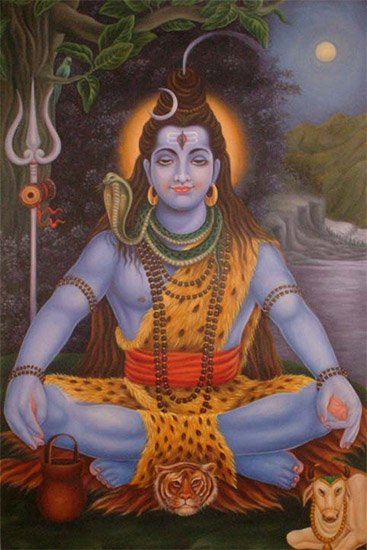
Shaiva (शैव, śaiva) or Shaivism (śaivism) represents a tradition of Hinduism worshiping Shiva as the supreme being. Closely related to Shaktism, Shaiva literature includes a range of scriptures, including Tantras, while the root of this tradition may be traced back to the ancient Vedas.
Kavya (poetry)
Aṃkusa (अंकुस) in Prakrit (or Aṅkuśa in Sanskrit) refers to a “hook”, as is mentioned in the Vividhatīrthakalpa by Jinaprabhasūri (13th century A.D.): an ancient text devoted to various Jaina holy places (tīrthas).
Kavya (काव्य, kavya) refers to Sanskrit poetry, a popular ancient Indian tradition of literature. There have been many Sanskrit poets over the ages, hailing from ancient India and beyond. This topic includes mahakavya, or ‘epic poetry’ and natya, or ‘dramatic poetry’.
Shaktism
1) Aṅkuśa (अङ्कुश) refers to the “curved shape of an elephant hook” symbolizing the universe, according to the Yoginīhṛdaya, an important Sanskrit text from the twelfth-century dealing with rituals of the Śrīvidyā school.—Accordingly, “If that supreme energy beholds the radiant pulse (sphuraṇa) of its own nature, she assumes the nature of Ambikā and is said to be Supreme Speech. If she is propense (unmukhī) to make the universe, which is in a seed state manifest, she is Vāmā, (so called) because she vomits out (vāmana) the universe and assumes the (curved shape of an elephant) hook (aṅkuśa). She is then the power of the will that abides in the form of the Speech of Vision (paśyantī). [...]”.
2) Aṅkuśa (अङ्कुश) refers to the “goad” and as one of the weapons (attributes) of Goddess Kubjikā symbolizes “(the means to attract and) control”, according to the Manthānabhairavatantra, a vast sprawling work that belongs to a corpus of Tantric texts concerned with the worship of the goddess Kubjikā.—Accordingly, “(Now) I will tell (you about) the great weapons of that (goddess) Kubjikā. [...] (One) attains (ultimate) reality by means of the trident and Māyā is destroyed by means of the wheel. All diseases are destroyed by the thunderbolt while the goad [i.e., aṅkuśa] is considered to be (the means to attract and) control. The enemy is destroyed by the arrow. The dagger is the avoidance of obstacles. Wealth is acquired by means of the severed head and the eight yogic powers by the ascetic’s staff”.
Aṅkuśa (अङ्कुश) refers to “(holding the) goad”, according to the King Vatsarāja’s Pūjāstuti called the Kāmasiddhistuti (also Vāmakeśvarīstuti), guiding one through the worship of the Goddess Nityā.—Accordingly, “[...] I approach the great temple of goddess Mṛḍānī that opens to the west. It is guarded outside by Indra and the other [gods who guard the directions], and shines beautifully with utmost richness. I venerate the young elephant-faced master of Śiva’s gaṇas, the destroyer of obstacles. His lotus-hands are decorated with a noose, goad (pāśa-aṅkuśa), fruit, and lotus. [...]
Shakta (शाक्त, śākta) or Shaktism (śāktism) represents a tradition of Hinduism where the Goddess (Devi) is revered and worshipped. Shakta literature includes a range of scriptures, including various Agamas and Tantras, although its roots may be traced back to the Vedas.
Yoga (school of philosophy)
Aṅkuśa (अङ्कुश) refers to a “goad”, according to the Mokṣopāya (verse 5.93.31cd-32ab) and Yogavāsiṣṭha (verse 5.92.34cd-35ab).—Accordingly, “The mind cannot be controlled without a method [of restraint], O irreproachable one, just as a vicious elephant in rut cannot be controlled without a goad (aṅkuśa)”.

Yoga is originally considered a branch of Hindu philosophy (astika), but both ancient and modern Yoga combine the physical, mental and spiritual. Yoga teaches various physical techniques also known as āsanas (postures), used for various purposes (eg., meditation, contemplation, relaxation).
Pancaratra (worship of Nārāyaṇa)
Aṅkuśa (अङ्कुश) or “spear” refers to one of the various ornaments and weapons of Viṣṇu to be contemplated upon, as discussed in chapter 13 of the Sāttvatasaṃhitā: one of the most ancient of Pāñcarātra Āgamas consisting of roughly 3500 verses which stresses the theological standpoint of the oneness of God despite his various vyūhas (modes of existence), vibhavas (manifestations) and avatāras (incarnations).—Description of the chapter [astra-bhūṣaṇa-devatā-dhyāna-vidhi]: Although generally speaking the gods have four arms, four faces, many ornaments, yet when they are worshipped they are to be imagined with only two arms, one head, etc. (1-2). Bhagavān says Viṣṇu has the following ornaments, and the descriptions are given as if the items are personified: [e.g., aṅkuśa-spear (22b)] [...] It is said that they are to be contemplated standing beside the Lord, with one hand on the hip, the other hand by some in waving a fly-whisk and by others in brandishing a warning finger. Some of the above are also identified with cosmic entities—sun, moon, death, etc. (26-34).
Pancaratra (पाञ्चरात्र, pāñcarātra) represents a tradition of Hinduism where Narayana is revered and worshipped. Closeley related to Vaishnavism, the Pancaratra literature includes various Agamas and tantras incorporating many Vaishnava philosophies.
Ayurveda (science of life)
Veterinary Medicine (The study and treatment of Animals)
Aṅkuśa (अङ्कुश) refers to the “elephants’ hook”, according to the 15th century Mātaṅgalīlā composed by Nīlakaṇṭha in 263 Sanskrit verses, dealing with elephantology in ancient India, focusing on the science of management and treatment of elephants.—[Cf. chapter 12, “On the qualities of elephant drivers, etc.”]: “17. Perceiving that the world was wholly oppressed by the elephants with their vast bodies, spirit, and might, and with their fierce power, at the request of Skanda Brahma in compassion created a certain Spirit (‘man’); he, having eyes red-cornered with wrath, shone with crest rising in the form of a tusk, and with hands marked with (the image of) kuśa-grass; therefore he was called aṅkuśa (‘hook’) [e.g., aṅkuśākhya]”.
Note: There are just four elephant hooks (aṅkuśa) recognized by the noble sages, resembling (respectively)—
- a thunderbolt (vajra),
- a half-moon (ardhacandra),
- a nail (nakha), and
- a keteka thorn (kaitakakaṇṭaka).
This Spirit (puruṣa) entered into them and took his station there, in order to control forever the must-maddened and extremely roguish elephants (matta-ati-duṣṭagaja-saṃyamana).
Āyurveda (आयुर्वेद, ayurveda) is a branch of Indian science dealing with medicine, herbalism, taxology, anatomy, surgery, alchemy and related topics. Traditional practice of Āyurveda in ancient India dates back to at least the first millenium BC. Literature is commonly written in Sanskrit using various poetic metres.
In Buddhism
Mahayana (major branch of Buddhism)
Aṅkuśa (अङ्कुश) is the name of a Buddha under whom Śākyamuni (or Gautama, ‘the historical Buddha’) acquired merit along the first through nine bhūmis, according to the Mahāvastu. There are in total ten bhūmis representing the ten stages of the Bodhisattva’s path towards enlightenment.
Aṅkuśa is but one among the 500 Buddhas enumerated in the Mahāvastu during a conversation between Mahākātyāyana and Mahākāśyapa, both principle disciples of Gautama Buddha. The Mahāvastu is an important text of the Lokottaravāda school of buddhism, dating from the 2nd century BCE.
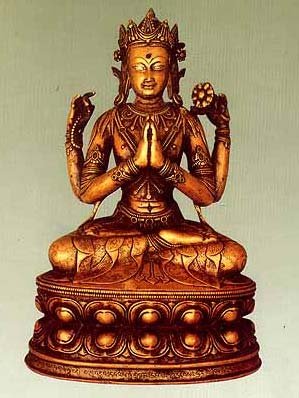
Mahayana (महायान, mahāyāna) is a major branch of Buddhism focusing on the path of a Bodhisattva (spiritual aspirants/ enlightened beings). Extant literature is vast and primarely composed in the Sanskrit language. There are many sūtras of which some of the earliest are the various Prajñāpāramitā sūtras.
Tibetan Buddhism (Vajrayana or tantric Buddhism)
1) Aṅkuśā (अङ्कुशा) refers to one of the “Forty-two Peaceful Deities” (Tibetan: zhi ba'i lha zhe gnyis) according to various sources such as the Guhyagarbha Tantra and the Tibetan Book of the Dead.—They feature in Tantric teachings and practices which focus on purifying elements of the body and mind. These deities [e.g., Aṅkuśā] form part part of the the Hundred Peaceful and Wrathful Deities who manifest to a deceased person following the dissolution of the body and consciousness whilst they are in the intermediate state (bardo) between death and rebirth.
Aṅkuśā is also known as Hayāsyā or Turaṅgamāsyā. She is known in Tibetan as: (1) lcags kyu ma or (2) rta gdong ma. She is the consort of Mahābala (or Vijaya, Acala) and is part of the “Four Female Gatekeepers”.
2) Ankuśā (अन्कुशा) refers to one of the “Fifty-eight Wrathful Deities” (Tibetan: khro bo lha nga brgyad). Ankuśā is part of the “four female gatekeepers” and is also known in Tibetan as (1) lcags kyu ma (2) rta gdong ma.
Aṅkuśa (अङ्कुश) refers to a “hook”, according to the Guru-maṇḍala-arcana [i.e., “Guru Mandala Worship]” ritual often performed in combination with the Cakrasaṃvara Samādhi, which refers to the primary pūjā and sādhanā practice of Newah Mahāyāna-Vajrayāna Buddhists in Nepal.—Accordingly, “By the form of a skull cup, and by the letter Māṃ, Vāruṇī, Eighteen arms, one face, red color, and three eyes, A sword, arrow and hook (aṅkuśa), on the right, a skull cup, ax and banner, Thus a mace, thus a bell, and in the ninth, granting wishes, A two-headed drum, a bow and noose, a staff and a water pot, A trident, hammer and lute, and thus a number, in the upper hand, A young adolescent beauty, a great beauty, a beautiful goddess”.
Aṅkuśa (अङ्कुश) refers to a “goad” or “iron hook” and represents one of the attributes of Vijaya or Rigden Namgyal—one of the Twenty-five Kulikas as well as one of the traditional Shambhala rulers.—His attributes are an elephant goad or iron hook (Sanskrit aṅkuśa; Tibetan: chagkyu [lcags kyu]) and a snare, noose or lasso.
Aṅkuśa (अङ्कुश) or “hook” also represents one of the attributes of (1) Viśvarūpa or Rigden Natshogzug; (2) Aniruddha or Rigden Magagpa.
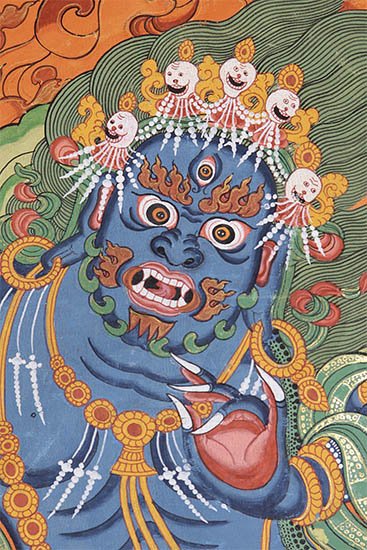
Tibetan Buddhism includes schools such as Nyingma, Kadampa, Kagyu and Gelug. Their primary canon of literature is divided in two broad categories: The Kangyur, which consists of Buddha’s words, and the Tengyur, which includes commentaries from various sources. Esotericism and tantra techniques (vajrayāna) are collected indepently.
In Jainism
General definition (in Jainism)
Aṃkuśā (अंकुशा) or Anantamatī is the name of the Yakṣa accompanying Anantanātha: the fourteenth of twenty-four Tīrthaṃkaras or Jinas, commonly depicted in Jaina iconography.—The symbolic mark which distinguishes Anantanātha from all other Tīrthaṃkaras is the hawk according to Śvetāmbaras and the bear according to the Digambaras. The Yakṣa and Yakṣiṇī, the goblins, serving him are named Pātāla and Anantamatī (Śvetāmbara Aṃkuśā) respectively. The Chowri-waver, in his case, was king Puruṣottama-Vāsudeva by name. The tree associated with his enlightenment is Aśvattha (Ficus religioso).
Aṃkuśā of the Śvetāmbaras is to be canonically sculpturedas seated on a lotus, and having four hands with a sword, noose, spear and goad. The Digambaras to whom this Yakṣiṇī is known as Anantamatī describe her as being carried by a swan and as holding in her hands a bow, arrow, fruit and Varada. The name “Aṃkuśā” appears to be derived from the Aṃkuśā or goad, which the Yakṣiṇī carries. In the same name, we find a Vidyādevī who also bears a goad. The name Anantamatī originates very evidently from Anantanātha, the Jina and master, whom the Yakṣiṇī waits upon. Brahmā’s wife is Sarasvatī; here the origin of the swan as a vehicle might be due to this connection.
Aṅkuśā (अङ्कुशा) is the name of the Yakṣiṇī (i.e., Śāsanadevatās or ‘messenger-deities’) associated with Ananta, according to chapter 4.4 [anantanātha-caritra] of Hemacandra’s 11th century Triṣaṣṭiśalākāpuruṣacaritra: an ancient Sanskrit epic poem narrating the history and legends of sixty-three illustrious persons in Jainism.
Accordingly:—“Pātāla, originating in that congregation, three-faced, with a makara for a vehicle, red, with three right hands holding a lotus, sword, and noose, and with three left hands holding an ichneumon, shield, and rosary, became Śrī Ananta’s messenger-deity. Likewise originated, Aṅkuśā, fair-bodied, with a lotus-vehicle, with a sword and noose in her right hands, and a shield and goad in her left hands, became also a messenger-deity of Ananta Svāmin”.
1) Aṅkusa (अङ्कुस) (in Prakrit) (Sanskrit: Aṅkuśa) refers to: A celestial abode in Mahāsukka (1) where gods are born with a maximum life-span of sixteen sāgaropama years.1
References and notes:
1. Samavāyāṅga 16.
2) Aṅkusa (अङ्कुस) (in Prakrit) refers to: A Gaha (planet) mentioned in Ṭhāṇa only.1 It is over and above eighty-eight planets.2
1. Sthānāṅga 90.
2. Sthānāṅga-vṛtti p. 78, fn. 1.
3) Aṅkuśa (अङ्कुश) (in Sanskrit) (Prakrit: Aṅkusa) refers to: A celestial abode in Mahāsukka (1) where gods are born with a maximum life-span of sixteen sāgaropama years.1
1. Samavāyāṅga 16.
Aṅkuśa (अङ्कुश).—From the time of his birth, Vṛṣabhanātha’s body had the insignia of thunderbolt, aṅkuśa, etc. which is Viṣṇu’s sings. King Nābhi called him Vṛṣabhanātha (par excellence) on account of his beautiful body, exceeding brilliance, strength, wealth, valour and courage.

Jainism is an Indian religion of Dharma whose doctrine revolves around harmlessness (ahimsa) towards every living being. The two major branches (Digambara and Svetambara) of Jainism stimulate self-control (or, shramana, ‘self-reliance’) and spiritual development through a path of peace for the soul to progess to the ultimate goal.
India history and geography
Ankusa refers to: “Elephant-goad, a hook, a goad; one who checks, governor”.—It is included in the glossary section of the study dealing with the Temples and Cult of Shri Rama in Tamil-Nadu, with reference to the traditional lore, embodied in, for example the Nalayirativvaiyappirapantam (i.e., Nalayira Divyaprabandham).

The history of India traces the identification of countries, villages, towns and other regions of India, as well as mythology, zoology, royal dynasties, rulers, tribes, local festivities and traditions and regional languages. Ancient India enjoyed religious freedom and encourages the path of Dharma, a concept common to Buddhism, Hinduism, and Jainism.
Biology (plants and animals)
Ankusha in India is the name of a plant defined with Cinnamomum tamala in various botanical sources. This page contains potential references in Ayurveda, modern medicine, and other folk traditions or local practices It has the synonym Cinnamomum tamala T. Nees & Eberm. (among others).
Example references for further research on medicinal uses or toxicity (see latin names for full list):
· Botanica expeditior (1760)
· Transactions of the Linnean Society of London (1822)
· Species Plantarum (1753)
· Handbuch der medicinisch-pharmaceutischen Botanik (1831)
· FBI (1886)
If you are looking for specific details regarding Ankusha, for example health benefits, chemical composition, extract dosage, side effects, pregnancy safety, diet and recipes, have a look at these references.

This sections includes definitions from the five kingdoms of living things: Animals, Plants, Fungi, Protists and Monera. It will include both the official binomial nomenclature (scientific names usually in Latin) as well as regional spellings and variants.
Languages of India and abroad
Pali-English dictionary
aṅkusa : (m.) a pole with a hook used for plucking fruits or to guide an elephant.
Aṅkusa, (Vedic aṅkuśa; to anc, see aṅka2) a hook, a pole with a hook, used (1) for plucking fruit off trees, a crook J.I, 9 (°pacchi hook & basket); V, 89 = VI, 520 (pacchikhanitti°), 529 (= phalānaṃ gaṇhanatthaṃ aṅkusaṃ). ‹-› (2) to drive an elephant, a goad (cp patoda & tutta) Vin.II, 196 (+ kasā); J.VI, 489; ThA.173 (ovādaṃ aṅkusaṃ katvā, fig. guide); Sdhp.147 (daṇḍ°). — (3) N. of a certain method of inference in Logic (naya), consisting in inferring certain mental states of a general character from respective traits where they are to be found Nett 2, 4, 127; Nett A 208;— acc° beyond the reach of the goad D.II, 266 (nāga). See also aṅkusaka.
aṅkusa (အင်္ကုသ) [(pu,na) (ပု၊န)]—
[aṅka+sa. ulā. ṇvādi. 215-.]
[အင်္က+သ။ ဥလာ။ ဏွာဒိ။ ၂၁၅-ကြည့်။]
[Pali to Burmese]
aṅkusa—
(Burmese text): (၁) ချွန်း။ (၂) ချွန်းနှင့်တူသော-ချွန်းသဖွယ်ဖြစ်သော-လမ်းညွန်လမ်းပြ။ (၃) သစ်သီး ချူစရာအတံ၊ တံချူ။ အာသဒ-(၂)-လည်းကြည့်။ (၄) (သပိတ်အိတ်ချိတ်စရာ) ချိတ်။ (၅) နေတ္တိပါဠိတော်လာ နည်းငါးမျိုးတို့တွင် အင်္ကုသမည်သော နည်း။ လိုအပ်သော ဝတ္ထုကို လိုရာအရပ်သို့ ချိတ်ဖြင့် ချိတ်ငင်ယူဆောင်သကဲ့သို့ ဒိသာလောစန နည်းဖြင့် ကြည့်ရှုအပ်ပြီးသော ဒိသာတရားတို့ကို အတ္ထနည်းသုံးပါး၌ ကောင်းစွာ ဆောင်ကြောင်းဖြစ်သော နည်း။
(Auto-Translation): (1) A branch. (2) Similar to a branch - resembling a branch - a guiding path. (3) A stick for picking fruits, a picking stick. (4) A hook (for attaching objects). (5) In the five methods of Natti Pali, the method of gathering (items) is described as making use of a hook to transport necessary items to the desired place, just as one would observe the properties of the method after looking into the specific principles that lead to good outcomes through three excellent methods.
Aṅkusa (in Pali) can be associated with the following Chinese terms:
1) 鴦倶舍 [yāng jù shě]: “(Skt. aṅgūṣa)”.

Pali is the language of the Tipiṭaka, which is the sacred canon of Theravāda Buddhism and contains much of the Buddha’s speech. Closeley related to Sanskrit, both languages are used interchangeably between religions.
Marathi-English dictionary
aṅkuśa (अंकुश).—m (S) An elephant goad. 2 Also aṅkuśī f A pole with a hook or blade at the extremity, for gathering fruits or flowers; a meak. hattīlā aṃ0 kēvaḍhā asatō Behold how small a goad governeth the great elephant! Used where little and mean persons or things rule or manage great ones.
aṅkuśa (अंकुश).—m An elephant goad.
Marathi is an Indo-European language having over 70 million native speakers people in (predominantly) Maharashtra India. Marathi, like many other Indo-Aryan languages, evolved from early forms of Prakrit, which itself is a subset of Sanskrit, one of the most ancient languages of the world.
Sanskrit dictionary
Aṅkuśa (अङ्कुश).—[aṅk-lakṣaṇe uśac Uṇ 4.17] A hook, a goad; Proverb: विक्रीते करिणि किमङ्कुशे विवादः (vikrīte kariṇi kimaṅkuśe vivādaḥ) why higgle about a trifling thing when the whole bargain (of which it forms part) has been struck; the goad ought to follow the elephant; संनिवेश्य कुशावत्यां रिपुनागाङ्कुशं कुशम् (saṃniveśya kuśāvatyāṃ ripunāgāṅkuśaṃ kuśam) R.15.97; (fig.) one who checks, a corrector, governor, director; त्यजति तु यदा मोहान्मार्गं तदा गुरुरङ्कुशः (tyajati tu yadā mohānmārgaṃ tadā gururaṅkuśaḥ) Mu.3.6; कुशं द्विषामङ्कुशम् (kuśaṃ dviṣāmaṅkuśam) R.16.81; (= Preventor) सिद्धेः पूर्वोऽङ्कुशस्त्रिविधा (siddheḥ pūrvo'ṅkuśastrividhā) Sānkhya. K.51. a restraint or check; निरङ्कुशाः कवयः (niraṅkuśāḥ kavayaḥ) poets have free license or are unfettered; pinching; पादावकर्षसन्धानैस्तोमराङ्कुशलासनैः (pādāvakarṣasandhānaistomarāṅkuśalāsanaiḥ) Mahābhārata (Bombay) 7.142.45.
-śī one of the 24 Jaina Goddesses. [cf. Germ. angel.]
Derivable forms: aṅkuśaḥ (अङ्कुशः).
--- OR ---
Aṅkūṣa (अङ्कूष).—[aṅk-ūṣac] = अङ्कुश (aṅkuśa) q. v.
Derivable forms: aṅkūṣaḥ (अङ्कूषः).
Aṅkuśa (अङ्कुश).—mn.
(-śaḥ-śaṃ) The hook used to drive an elephant. E. aka to go, and uśac Unadi aff. with num inserted.
--- OR ---
Aṅkūṣa (अङ्कूष).—mn.
(-ṣaḥ-ṣaṃ) The hook or goad for driving an elephant. E. See aṅkuśa, u being made long.
Aṅkuśa (अङ्कुश).—i. e. aṅku (in the Ved. aṅkūya from añc, cf. aṅka) + śa, m. and n. 1. A hook. 2. A goad for driving elephants with.
Aṅkuśa (अङ्कुश).—[masculine] hook, [especially] for driving an elephant.
1) Aṅkuśa (अङ्कुश):—[from aṅk] mn. a hook, especially an elephant-driver’s hook
2) Aṅkuśā (अङ्कुशा):—[from aṅkuśa > aṅk] f. one of the twenty-four Jaina goddesses, [cf. Lexicographers, esp. such as amarasiṃha, halāyudha, hemacandra, etc.]
3) Aṅkuśa (अङ्कुश):—[from aṅk] cf. [Greek] ἄγκιστρον; [German] Angel.
4) Aṅkūṣa (अङ्कूष):—[from aṅk] mn. an ichneumon, [Uṇādi-sūtra] [commentator or commentary]
5) [v.s. ...] cf. aṅgūṣa.
Aṅkuśa (अङ्कुश):—I. m. n.
(-śaḥ-śam) A hook, especially one used to drive an elephant. Ii. f.
(-śā or sometimes read -śī) One of the twentyfour female deities peculiar to the Jainas, supposed to direct or to govern more immediately human beings. E. aṅk (to mark) (or according to some authority añc, c being changed to k), uṇ. aff. uśac; in the fem. with aff. ṅīp.
--- OR ---
Aṅkūṣa (अङ्कूष):—m. n.
(-ṣaḥ-ṣam) The hook or goad for driving an ele-phant. E. See aṅkuśa, u being made long, and śa changed to ṣa.
1) Aṅkuśa (अङ्कुश):—[(śaḥ-śaṃ)] 1. m. n. The hook used to drive an elephant.
2) Aṅkūṣa (अङ्कूष):—[(ṣaḥ-ṣaṃ)] 1. m. n. Vide aṅkuśa.
Aṅkuśa (अङ्कुश):—
--- OR ---
Aṅkūṣa (अङ्कूष):—m. n. = aṅkuśa [Uṇādikoṣa im Śabdakalpadruma]
--- OR ---
Aṅkuśa (अङ्कुश):—
1) a) ein zum Antreiben des Elephanten dienender Haken: (mātaṅgaḥ) aṅkuśāṅguṣṭhanoditāḥ [Mahābhārata 9, 1005.] vāraṇa [Halāyudha 2, 67.] bildlich: strīvākyāṅkuśaprakṣuṇṇa [Spr. 1025.] darpāṅkuśa (so ist zu lesen) ein Mittel gegen [Suśruta 2, 284, 18.] vasiṣṭhasyāṅkuśaḥ Name eines Sāman (= kaśyapasya pratodaḥ) [Weber’s Indische Studien.3,233,a.] — b) eine best. Stellung der Hand [Oxforder Handschriften 86,a,31. 202,a,7.]
--- OR ---
Aṅkūṣa (अङ्कूष):—m. Ichneumon [UJJVAL.] zu [Uṇādisūtra 4, 76.]
Aṅkuśa (अङ्कुश):——
1) m. *n. — a) Haken , insbes. zum Antreiben eines Elephanten [185,12.] — b) in übertr. Bed. so v.a. Sporn , Reizmittel , oder auch Mittel gegen Etwas. — c) eine best. Stellung der Hand. — d) *Clitoris [Galano's Wörterbuch] — e) *Riegel oder Schlüssel [Galano's Wörterbuch] —
2) *f. ā oder ī Nomen proprium einer Göttin bei den Jaina.
--- OR ---
Aṅkūṣa (अङ्कूष):—m. Ichneumon.
Aṅkuśa (अङ्कुश) in the Sanskrit language is related to the Prakrit words: Aṃkusa, Aṃkusā.
Aṅkuśa (in Sanskrit) can be associated with the following Chinese terms:
1) 鈎 [gōu]: “hook”.
2) 鉤 [gōu]: “hook”.
2) Aṅkuṣa (in Sanskrit) can be associated with the following Chinese terms:
1) 鈎 [gōu]: “hook”.
2) 鉤 [gōu]: “hook”.
2) Aṇkuśa (in Sanskrit) can be associated with the following Chinese terms:
1) 勾 [gōu]: “hook”.
Sanskrit, also spelled संस्कृतम् (saṃskṛtam), is an ancient language of India commonly seen as the grandmother of the Indo-European language family (even English!). Closely allied with Prakrit and Pali, Sanskrit is more exhaustive in both grammar and terms and has the most extensive collection of literature in the world, greatly surpassing its sister-languages Greek and Latin.
Hindi dictionary
Aṃkuśa (अंकुश) [Also spelled ankush]:—(nm) a hook, elephant-driver’s iron hook; hamulus; control;—[rakhanā] to exercise control, —[rahanā]/[honā] to have control over.
...
Prakrit-English dictionary
1) Aṃkusa (अंकुस) in the Prakrit language is related to the Sanskrit word: Aṅkuśa.
2) Aṃkusa (अंकुस) also relates to the Sanskrit word: Aṅkuśa.
3) Aṃkusā (अंकुसा) also relates to the Sanskrit word: Aṅkuśā.
Prakrit is an ancient language closely associated with both Pali and Sanskrit. Jain literature is often composed in this language or sub-dialects, such as the Agamas and their commentaries which are written in Ardhamagadhi and Maharashtri Prakrit. The earliest extant texts can be dated to as early as the 4th century BCE although core portions might be older.
Kannada-English dictionary
Aṃkuśa (ಅಂಕುಶ):—
1) [noun] a sharp-pointed metal rod to drive and control elephants; a goad.
2) [noun] a particular hold in wrestling.
3) [noun] a kind of mystical mark (representing the sacred syllable 'ಓಂ [om]').
4) [noun] (fig.) any curb or restraint; a check.
5) [noun] (fig.) one who controls.
--- OR ---
Aṃkusa (ಅಂಕುಸ):—[noun] = ಅಂಕುಶ [amkusha].
Kannada is a Dravidian language (as opposed to the Indo-European language family) mainly spoken in the southwestern region of India.
Nepali dictionary
Aṅkuśa (अङ्कुश):—n. 1. a hook; a goad (for controlling an elephant); 2. restriction; check; control;
Nepali is the primary language of the Nepalese people counting almost 20 million native speakers. The country of Nepal is situated in the Himalaya mountain range to the north of India.
See also (Relevant definitions)
Partial matches (+0): Sha, Anka, Ca.
Starts with (+4): Amkushahaku, Amkushakapali, Ankusaka, Ankushacarana, Ankushacodana, Ankushadhara, Ankushadharin, Ankushadurddhara, Ankushadurdhara, Ankushaghata, Ankushagra, Ankushagraha, Ankushahasta, Ankushakhya, Ankushamantra, Ankushamudra, Ankushartha, Ankushasana, Ankushasancarana, Ankushasancarana.
Full-text (+330): Nirankusha, Vajrankusha, Ankushagraha, Bhutankusha, Accankusa, Ankushadhara, Madanankusha, Jvarankusha, Anankusha, Kamankusha, Avamatankusha, Amlankusha, Ankushadurdhara, Smarankusha, Papankusha, Vyankusha, Ankusaka, Nirankusham, Ankushamudra, Ankusagayha.
Relevant text
Search found 107 books and stories containing Ankusha, Aṃkuśa, Aṃkuśā, Amkusa, Aṃkusa, Aṃkusā, Amkusha, Anka-sa, Aṅka-sa, Aṅkūṣa, Aṅkuśā, Aṅkuśa, Aṅkusa, Ankusa, Aṅkusā, Aṅkuṣa, Aṇkuśa; (plurals include: Ankushas, Aṃkuśas, Aṃkuśās, Amkusas, Aṃkusas, Aṃkusās, Amkushas, sas, Aṅkūṣas, Aṅkuśās, Aṅkuśas, Aṅkusas, Ankusas, Aṅkusās, Aṅkuṣas, Aṇkuśas). You can also click to the full overview containing English textual excerpts. Below are direct links for the most relevant articles:
Shiva Purana [sanskrit/english]
Uttaradhyayana Sutra [prakrit]
Rig Veda (translation and commentary) (by H. H. Wilson)
Dictionaries of Indian languages (Kosha)
Page 11 < [Hindi-Malayalam-English Volume 1]
Page 86 < [Gujarati-Hindi-English, Volume 1]
Page 11 < [Hindi-Gujarati-English Volume 1]
Archaeology and the Mahabharata (Study) (by Gouri Lad)
Part 2 - Piercing Weapons in the Mahabharata < [Chapter 14 - Weapons]
Part 14 - Weapons during Phase III (200 B.C. 200 A.D.) < [Chapter 14 - Weapons]
Part 10 - Astras (missiles) in the Mahabharata < [Chapter 14 - Weapons]
Kathasaritsagara [Sanskrit/English] (by C. H. Tawney)