Agnistambhana, Agni-stambhana: 5 definitions
Introduction:
Agnistambhana means something in Hinduism, Sanskrit. If you want to know the exact meaning, history, etymology or English translation of this term then check out the descriptions on this page. Add your comment or reference to a book if you want to contribute to this summary article.
In Hinduism
Pancaratra (worship of Nārāyaṇa)
Agnistambhana (अग्निस्तम्भन) or Agnistambhanamantra is the name of an Aupacārika (subsidiary) Mantra (needed in the worship of Viṣṇu), as discussed in chapter 33 (Caryāpāda) of the Padmasaṃhitā: the most widely followed of Saṃhitā covering the entire range of concerns of Pāñcarātra doctrine and practice (i.e., the four-fold formulation of subject matter—jñāna, yoga, kriyā and caryā) consisting of roughly 9000 verses.—Description of the chapter [aupacārika-mantra-kalpa]: All the main mantras having been given in the preceding chapters, the present and concluding chapter turns to a treatment of other, subsidiary mantras needed in the worship of Viṣṇu. [...] The following ones are the mantras which could be easily mastered: [e.g., agnistambhana-mantra (1143-118a), [...]
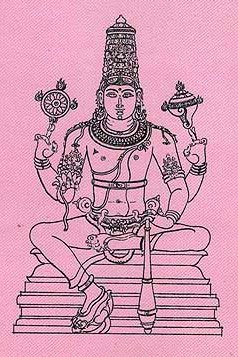
Pancaratra (पाञ्चरात्र, pāñcarātra) represents a tradition of Hinduism where Narayana is revered and worshipped. Closeley related to Vaishnavism, the Pancaratra literature includes various Agamas and tantras incorporating many Vaishnava philosophies.
Shilpashastra (iconography)
Agnistambhana (अग्निस्तम्भन) refers to “magic by fire” and represents one of the sixty-four arts associated with Sarasvatī, Śāradā (=Śāradādevī), Devī-Lalitā or Catuṣṣaṣṭikalādevī: a form of Devī whose Pratimālakṣaṇa (Śakti-based iconographical details) are discussed in verse 1.91 of the Śrītattvanidhi of Śrī Kṛṣṇarāja Uḍaiyar (in its Tañcāvūr Sarasvatī Mahal Library edition).—Devī-Lalitā is the Cosmic Mistress. She is the Mistress of Sixty-four Arts (e.g, agnistambhana); [...] She is named Śāradādevī; the manifestation of Mahā-Sarasvatī.
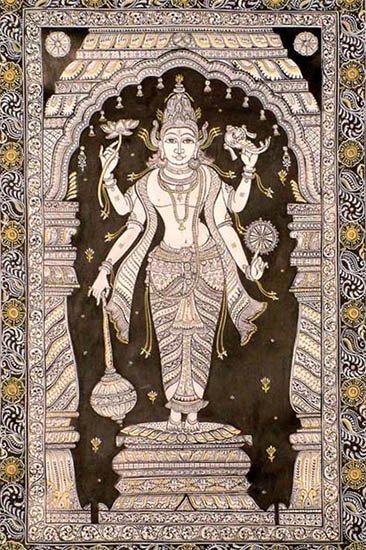
Shilpashastra (शिल्पशास्त्र, śilpaśāstra) represents the ancient Indian science (shastra) of creative arts (shilpa) such as sculpture, iconography and painting. Closely related to Vastushastra (architecture), they often share the same literature.
Languages of India and abroad
Sanskrit dictionary
Agnistambhana (अग्निस्तम्भन):—[=agni-stambhana] [from agni] n. the (magical) quenching of fire.
Agnistambhana (अग्निस्तम्भन):—n. = agnistambha [Oxforder Handschriften 322,b,16.]
Sanskrit, also spelled संस्कृतम् (saṃskṛtam), is an ancient language of India commonly seen as the grandmother of the Indo-European language family (even English!). Closely allied with Prakrit and Pali, Sanskrit is more exhaustive in both grammar and terms and has the most extensive collection of literature in the world, greatly surpassing its sister-languages Greek and Latin.
Kannada-English dictionary
Agnistaṃbhana (ಅಗ್ನಿಸ್ತಂಭನ):—[noun] = ಅಗ್ನಿಸ್ತಂಭ - [agnistambha -] 1.
Kannada is a Dravidian language (as opposed to the Indo-European language family) mainly spoken in the southwestern region of India.
See also (Relevant definitions)
Partial matches (+0): Stambhana, Agni, Ani.
Starts with (+0): Agnistambhanamantra.
Full-text (+0): Agnistambha, Agnistambhanamantra, Aupacarikamantrakalpa.
Relevant text
Search found 4 books and stories containing Agnistambhana, Agni-stambhana, Agnistaṃbhana; (plurals include: Agnistambhanas, stambhanas, Agnistaṃbhanas). You can also click to the full overview containing English textual excerpts. Below are direct links for the most relevant articles:
A Descriptive Catalogue of the Sanskrit Manuscripts, Madras (by M. Seshagiri Sastri)
Garuda Purana (by Manmatha Nath Dutt)
Chapter CCV - Various other medicinal Recipes (continued) < [Dhanvantari Samhita]
Samrajya Lakshmi Pithika (Study) (by Artatrana Sarangi)
The Sixty-four Kalas (arts) befitting a King < [Chapter 4 - King and his Paraphernalia]
World Journal of Pharmaceutical Research
Arka prakasha – a critical review < [2021: Volume 10, November issue 13]